
About truck parking
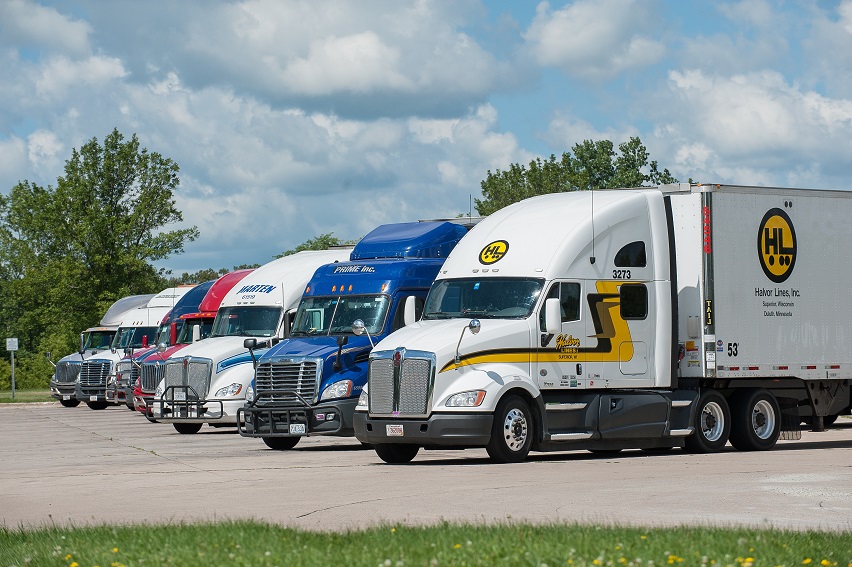
Trucks move an estimated 85 percent of all manufactured goods in Minnesota, including household items. Truck parking is an important resource because truck drivers need a safe place to rest as well as to meet trucking requirements.
MnDOT operates and maintains rest areas with truck parking across the state for safety. However, over 85 percent of all truck parking in Minnesota is owned and operated by private companies, such as truck stops, shippers and carriers.
2026 Truck Parking Study
MnDOT is initiating a new Truck Parking Study to be completed in 2026. This study will identify current truck parking availability, needs and issues and potential solutions. As the majority of freight by tonnage is moved from, to, or within Minnesota by truck, it is vital to the function of the state freight system that there is sufficient and acceptable truck parking. Having sufficient truck parking is also key to ensuring the safety and well-being of truck drivers and all other road users, and people that live nearby freight facilities or where trucks travel. MnDOT will use the Truck Parking Study to help inform decision-making around truck parking solutions, such as parking at our state public rest areas and solutions in tandem with the truck parking industry. Check this website for updates on the 2026 Truck Parking Study. The 2026 Truck Parking Study survey closed on May 22, 2026.
2019 Statewide Truck Parking Study
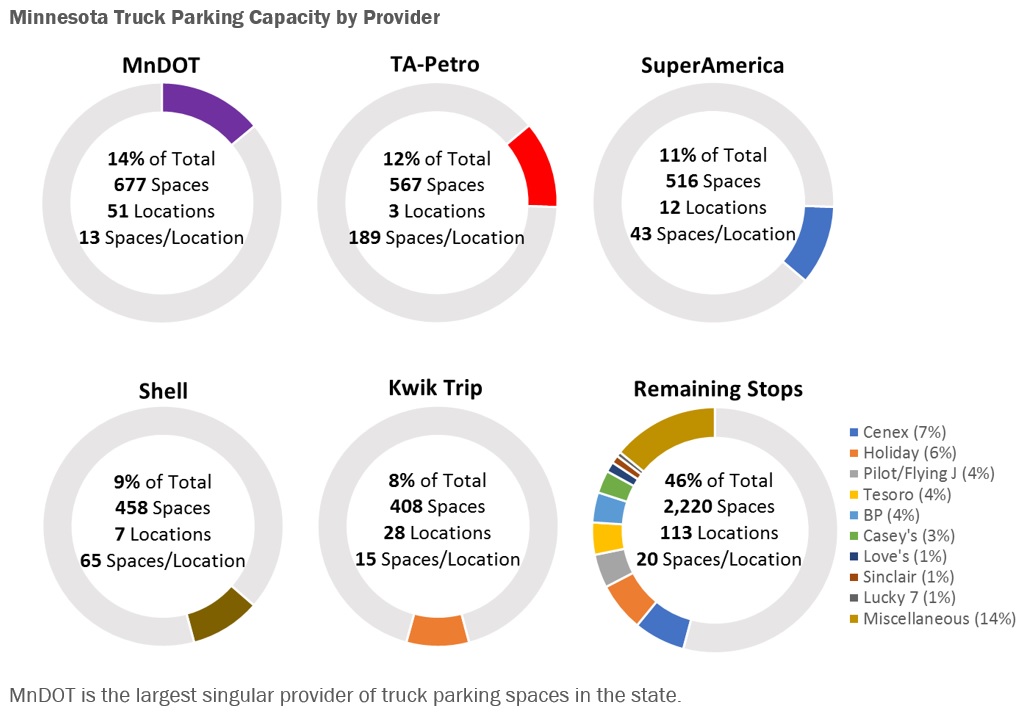
The graphic above shows truck parking capacity by provider across Minnesota. Currently, MnDOT is the largest provider of truck parking in the state. (Click on the graphic to enlarge it)
MnDOT has completed a statewide truck parking study in collaboration with the trucking industry to identify existing parking trends, where key capacity gaps are and to identify future potential solutions. The study gathered data from across the state at rest areas and at truck stops to respond to key information needed for the federal Jason's Law Survey.
The study also used a novel combination of specialized Streetlight Insight data and GPS Probe data to identify locations where the largest truck parking needs are in the state.